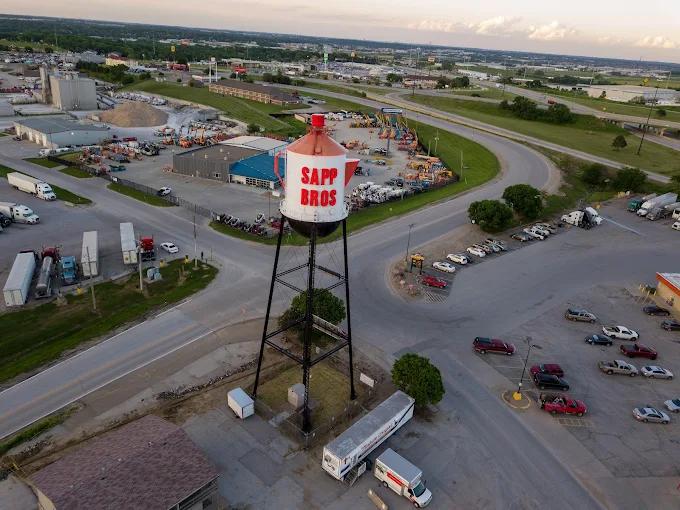
MOVING TO WEST OMAHA: A LOCAL GUIDE TO HOMES, SCHOOLS, COMMUTES, AND DAILY LIFE
West Omaha is not one neighborhood. This local guide explains how the homes, schools, commute, amenities, and overall feel change depending on where you look.
Whenever someone tells me they want to live in West Omaha, my first question is usually: what do you mean by West Omaha?
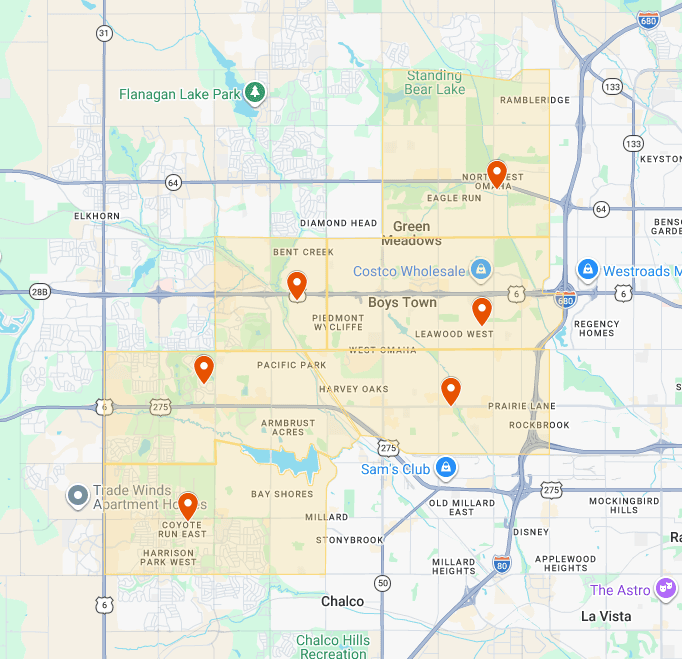
West Omaha is not one official neighborhood with one clean set of boundaries. It is a broad term people use to describe a large section of the city, and the experience can change quite a bit depending on whether you are closer to 120th Street, near Village Pointe, around Zorinsky Lake, or farther southwest.
For this guide, I am using the Omaha-address ZIP codes 68144, 68154, 68164, 68118, 68130, and 68135 as a practical way to discuss West Omaha. I am treating Elkhorn and 68022 separately because buyers usually mean something different when they specifically ask to live in Elkhorn.
Also see: my full guide to moving to Omaha.

By Steven Besse, Realtor at Berkshire Hathaway HomeServices Ambassador Real Estate. Got a quick question about this area? My AI assistant can help right now.
WEST OMAHA AT A GLANCE
West Omaha is one of the easiest parts of Omaha to live in from a day-to-day convenience standpoint. You will generally find:
More suburban neighborhoods and attached garages
Established homes closer in and newer homes farther west
Convenient access to shopping, restaurants, healthcare, parks, and major roads
More space and parking, but less walkability than Downtown, Midtown, Dundee, Blackstone, or Aksarben
The biggest tradeoff is that West Omaha is primarily designed around driving. You may be close to almost everything you need, but that does not necessarily mean you can walk to it.
WHAT DOES LIVING IN WEST OMAHA FEEL LIKE?
The best way I can describe West Omaha is convenience-first suburban living. Most neighborhoods have wider streets, larger subdivisions, driveways, attached garages, cul-de-sacs, neighborhood parks, and quick access to larger commercial areas. You are rarely far from a grocery store, gym, coffee shop, medical office, or restaurant.
It is also not all brand-new construction. Some sections of West Omaha have large trees, established lots, and homes that have been there for 40, 50, or even 60 years. Other sections have newer two-story homes, ranch villas, townhomes, and subdivisions that are still being completed.
That variety is why I do not like giving buyers one average home price or one description for all of West Omaha. The neighborhood, ZIP code, home age, school district, and exact location can make a major difference.
HOMES IN WEST OMAHA
West Omaha’s housing generally becomes newer as you travel west and southwest. These are broad descriptions rather than strict rules — you can still find an older home farther west or a newer infill property closer in.
Established ranches, split-levels, split entries and traditional homes, with much of the housing dating to the 1950s and 1960s
Central West Omaha with many 1970s and 1980s homes, mature neighborhoods and convenient access to Dodge Street
A mixture of single-family homes, townhomes and apartments, with much of the area developed during the 1980s and 1990s
Predominantly single-family neighborhoods, move-up homes and subdivisions developed during the 1990s and later
Larger two-story homes, ranches, villas and move-up neighborhoods, with significant 1990s and 2000s development
Newer southwest Omaha neighborhoods, larger floor plans and substantial early-2000s and newer construction
| ZIP Code | General Housing Character |
|---|---|
| 68144 | Established ranches, split-levels, split entries and traditional homes, with much of the housing dating to the 1950s and 1960s |
| 68154 | Central West Omaha with many 1970s and 1980s homes, mature neighborhoods and convenient access to Dodge Street |
| 68164 | A mixture of single-family homes, townhomes and apartments, with much of the area developed during the 1980s and 1990s |
| 68118 | Predominantly single-family neighborhoods, move-up homes and subdivisions developed during the 1990s and later |
| 68130 | Larger two-story homes, ranches, villas and move-up neighborhoods, with significant 1990s and 2000s development |
| 68135 | Newer southwest Omaha neighborhoods, larger floor plans and substantial early-2000s and newer construction |
Closer-in West Omaha can be a strong option when you want mature trees, established neighborhoods, a shorter drive toward Midtown or Downtown, and a lower entry point than some of the far-west subdivisions.
The tradeoff is that remodeling quality can vary dramatically. One house may have updated windows, plumbing, electrical systems, HVAC equipment and a finished basement. The house next door may still have many of its original components. That does not automatically make the older house a bad option — it just means the inspection, maintenance history and quality of the updates matter.
As you travel farther west and southwest, you will generally find newer construction eras, larger floor plans, more open layouts, larger primary suites and a higher concentration of attached three-car garages.
You may also run into more homeowners associations, smaller newly planted trees, developing commercial areas and ongoing construction. Newer does not always mean maintenance-free, so I still recommend inspecting the property and reviewing the builder, warranties, grading and drainage.
WEST OMAHA HOME PRICES
There is no honest single price that represents West Omaha. The included ZIP codes cover everything from older starter and mid-range homes to luxury neighborhoods, villas, townhomes and larger custom properties. Even two neighborhoods located only a few miles apart can have completely different price ranges.
Instead of relying on a broad West Omaha median, I recommend narrowing the search based on:
- Your realistic monthly payment
- The age and style of home you prefer
- Your maximum commute
- The school district or attendance area you need
- Whether you want an established neighborhood or newer construction
Once those five things are clear, West Omaha becomes much easier to narrow down.
View Current West Omaha HomesThinking about this move?
Tell me your budget, preferred home age, and commute and I can help narrow down which part of West Omaha actually fits.
WEST OMAHA SCHOOL DISTRICTS
One of the most important things to understand is that an Omaha mailing address does not tell you the school district. This article treats Elkhorn as a separate geographic area, but school-district boundaries do not follow the same labels buyers and real estate websites use.
School assignments can change from one subdivision to another, and occasionally from one side of a major street to the other. I would never tell a buyer that a home belongs to a certain school based only on the listing description — I verify it directly with the district before treating it as confirmed.
Disclaimer: School boundary lines can change. Always verify enrollment eligibility directly with the school district before purchasing.
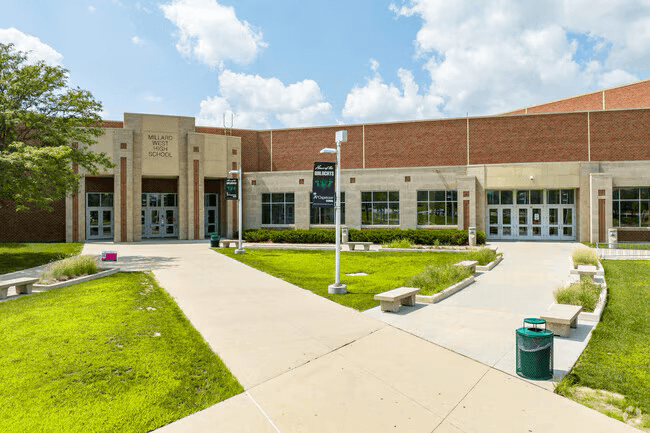
Depending on the exact property, West Omaha buyers may encounter:
COMMUTING FROM WEST OMAHA
There is not one accurate “West Omaha to Downtown” commute time because West Omaha covers too much ground. A home near 120th Street will have a different commute from one near 180th Street. Your access to Dodge, West Center, Maple, Interstate 680 or the expressway will also affect the drive.
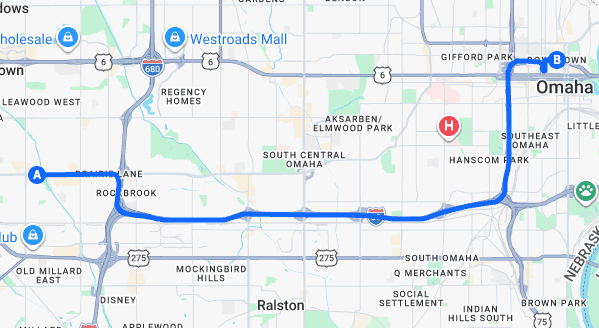
~20 min to Downtown without heavy traffic
~25–35 min to Downtown
Often more convenient than Downtown
Often ~30–45 min depending on start point, traffic and gate
Those are planning estimates, not guarantees. I recommend checking the drive from the exact house during the time you would normally commute.
West Omaha is still primarily car-dependent, but there are limited public transportation options. Metro’s weekday Route 92 West Dodge Express serves Village Pointe Park & Ride, First National Bank Park & Ride and Westroads Transit Center. Riders can connect at Westroads with ORBT, which travels along Dodge Street toward Downtown.
That can be useful for certain commuters, but I would not choose a West Omaha property assuming it will offer the same transit access as a neighborhood closer to the city center.
PARKS AND OUTDOOR RECREATION
West Omaha has several strong outdoor options, especially when you want trails, lakes, sports fields and larger recreation areas.

One of the best-known outdoor destinations in West Omaha. The lake covers approximately 255 acres, with trails, playgrounds, athletic fields and accessible fishing. Popular with buyers who want suburban housing while still being close to a large outdoor space.
Chalco Hills Recreation Area sits along the southwest edge of the metro but is convenient to many southwest and West Omaha neighborhoods, surrounding the roughly 245-acre Wehrspann Lake and connecting with Omaha’s wider trail system.
Smaller neighborhood parks, playgrounds and trail connections are found throughout West Omaha. Access varies by subdivision, so look at the actual route from the house rather than assuming every neighborhood connects directly to a major trail.
SHOPPING, RESTAURANTS, AND ENTERTAINMENT
One of West Omaha’s biggest strengths is convenience. Village Pointeis one of the area’s main shopping and entertainment anchors — an open-air center near 168th Street and West Dodge Road with more than 60 retail, restaurant and entertainment offerings.
The Shops of Legacy and surrounding Wright Plaza area add another concentration of restaurants, coffee shops, services and smaller retail options. Farther east, Westroads, Regency and the 120th Street corridor are also reasonably accessible from many West Omaha neighborhoods. The result is that most residents do not need to travel Downtown for normal shopping, dining or entertainment — West Omaha largely operates as its own section of the city.
BOYS TOWN: A UNIQUE PART OF WEST OMAHA
Boys Town is one of the most distinctive places in West Omaha. The Village of Boys Town sits between roughly 132nd and 150th Streets, between West Dodge Road and Pacific Street. It is surrounded by Omaha but maintains its own historic campus, homes, schools, churches and visitor attractions.
Boys Town is also the only National Historic Landmark District in Nebraska. Visitors can explore parts of the campus, including the Hall of History, Dowd Memorial Chapel and Father Flanagan’s historic home.
It gives this section of West Omaha a historic landmark that feels completely different from the commercial corridors and suburban subdivisions surrounding it.
WHAT IS BEING DEVELOPED IN WEST OMAHA?
West Omaha continues to grow, especially along the 180th and 192nd Street corridors.
One of the largest current development stories in the area — a large mixed-use development at 192nd Street and West Dodge Road bringing new shopping, dining and housing to the corridor. Tenant plans can change as construction progresses, but the project shows how shopping, dining, housing and employment continue moving west. Avenue One development updates →
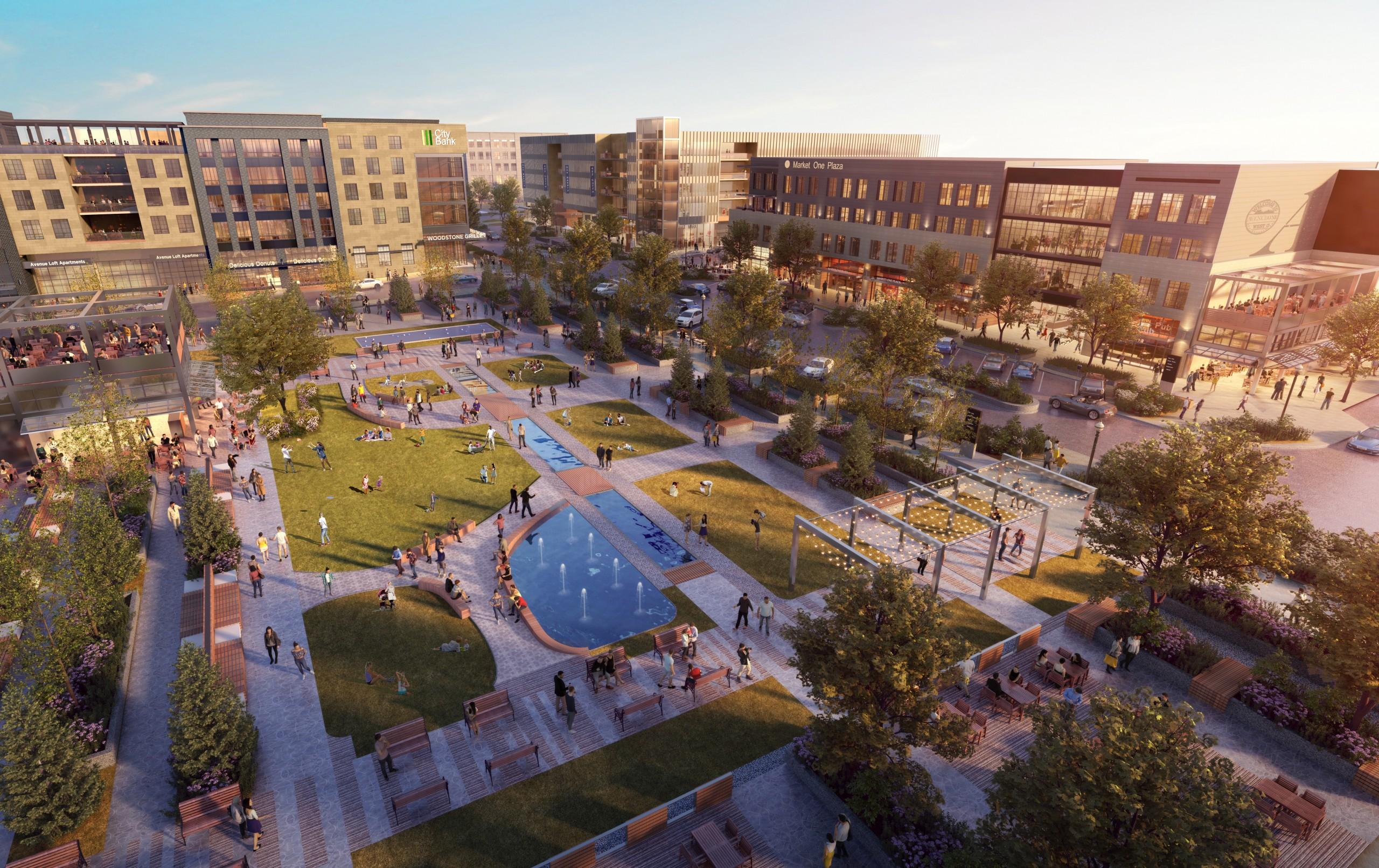
Village Pointe and the surrounding commercial area are also continuing to evolve, with additional development planned around West Village Pointe. That growth adds convenience, but buyers should also consider future construction, traffic and land development when choosing a home near the western edge.
WEST OMAHA VERSUS ELKHORN
West Omaha and Elkhorn are commonly grouped together online, but I do not consider them interchangeable. There is overlap, especially near the western edge — that is why I separate the two guides but still verify every property individually.
- A wider range of housing ages and prices
- More established neighborhoods closer to the center of Omaha
- Easier access to Midtown and Downtown from the closer-in sections
- Multiple school districts depending on the address
- A mixture of older homes, move-up neighborhoods, villas and newer development
- A more distinct far-west identity
- A greater concentration of newer construction
- More development around the outward growth edge
- More frequent association with Elkhorn Public Schools
- A generally longer drive toward Midtown, Downtown and Offutt
IS WEST OMAHA THE RIGHT FIT FOR YOU?
- More interior space, garage space or yard space
- Suburban neighborhoods and convenient errands
- Access to parks, shopping and western medical campuses
- A choice between established homes and newer construction
- Easier parking and less congestion than denser urban neighborhoods
- Walking to independent restaurants and nightlife
- Living close to the Downtown business district
- Using public transportation as your main form of travel
- Historic architecture and traditional grid-style neighborhoods
- Avoiding a regular driving commute
Neither lifestyle is automatically better. The right answer depends on what you want your normal weekday to look like.
WHAT TO CHECK BEFORE BUYING IN WEST OMAHA
Before writing an offer, I recommend checking the following for the individual property. This is where two similar-looking West Omaha homes can turn out to be completely different purchases.
School assignment: Verify it directly through the district using the address.
Actual commute: Test it during your normal morning or afternoon commute.
Property taxes: Compare the current tax bill rather than estimating from the purchase price alone.
HOA obligations: Review dues, restrictions, maintenance responsibilities and pending changes.
Home age: Pay attention to windows, roof, HVAC, sewer, electrical systems, foundation and drainage.
Future development: Look at vacant land and planned projects near the neighborhood.
Neighborhood layout: Confirm sidewalks, trail access, parking and distance to everyday services.
MY HONEST TAKE ON WEST OMAHA
I’ve spent parts of my life living right here in West Omaha, so this take comes from actually living it, not just selling it.
To me, it’s the ideal spot for someone who wants to be close to everything. You can get downtown, out to Elkhorn, or down to Lincoln fast, and you still keep that suburban feeling without ever feeling secluded.
It’s also one of the only areas around here that has a spot for pretty much anyone. Want a $250,000 home? You’ll find it. Want a $2.5 million home? You’ll find that too. Being that close to everything while still keeping the peace you get from living in the suburbs is honestly unmatched anywhere else in the metro.
The most important thing is not deciding that you want “West Omaha.” It is deciding which part of West Omaha actually fits you. Someone who wants a renovated ranch with mature trees and a shorter Downtown commute should not be searching the same neighborhoods as someone who wants a newer two-story home near 192nd Street. Both may technically be West Omaha, but they are very different searches.
Tell me your budget, preferred home age, commute and non-negotiables, and I can help narrow the area down to the neighborhoods and properties that actually make sense.
FREQUENTLY ASKED QUESTIONS ABOUT WEST OMAHA

Thinking About Moving to West Omaha?
Steven Besse — Berkshire Hathaway HomeServices Ambassador Real Estate
Your No Pressure Realtor
I help buyers compare Omaha neighborhoods without pressuring them into whichever house happens to be available. Whether you are moving from across town or across the country, I can help you understand the neighborhoods, school boundaries, commute differences and housing options before you schedule a full weekend of showings.
LET’S CONNECT
Fill this out and I’ll respond within 24 hours — or call/text: 531-255-5400